Role of Heat Sinks in Pyrolysis:
- Temperature Regulation: Prevents excessive temperature spikes that could lead to unwanted secondary reactions.
- Heat Redistribution: Ensures uniform heating within the pyrolysis reactor, avoiding local hotspots.
- Material Protection: Protects reactor walls and sensitive components from thermal degradation.
- Energy Recovery: Some designs use heat sinks to capture excess thermal energy for reuse, improving system efficiency.
RESULTS EXPLANATION:
1. Temperature Distribution and Heat Transfer
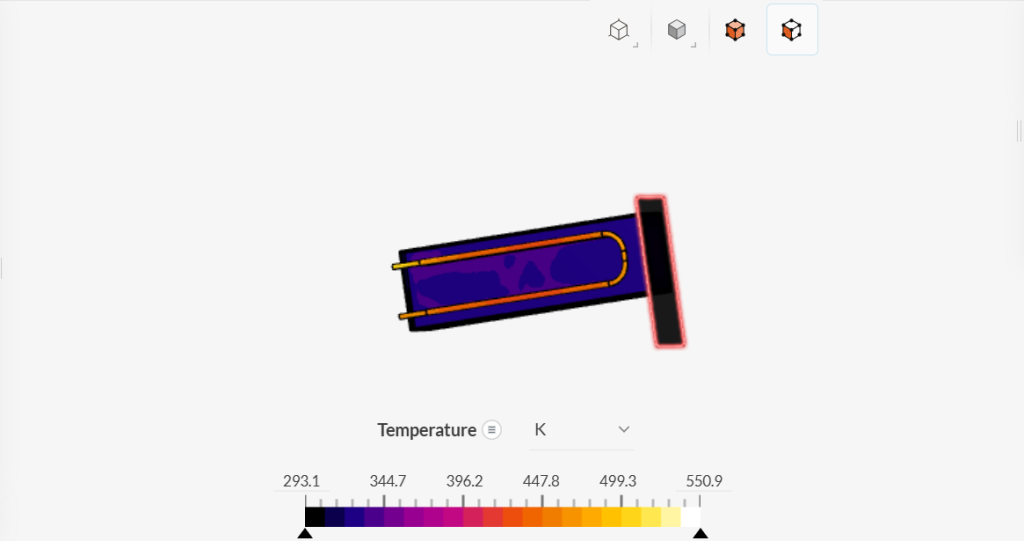
- The third image shows a temperature distribution of the heat sink model, with the color scale ranging from 293.1K (black) to 550.9K (white).
- The highest temperature appears at the heat sink outlet (red highlighted area), which suggests heat accumulation or poor heat dissipation in that region.
- The internal fluid flow path (orange lines) indicates a looped flow, possibly through a cooling channel designed to enhance heat dissipation.
2. Velocity and Pressure Analysis
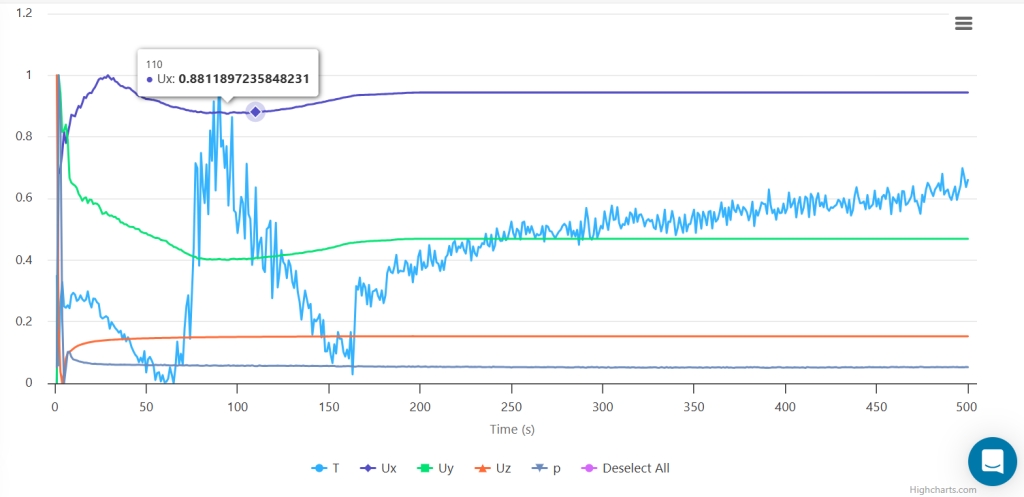
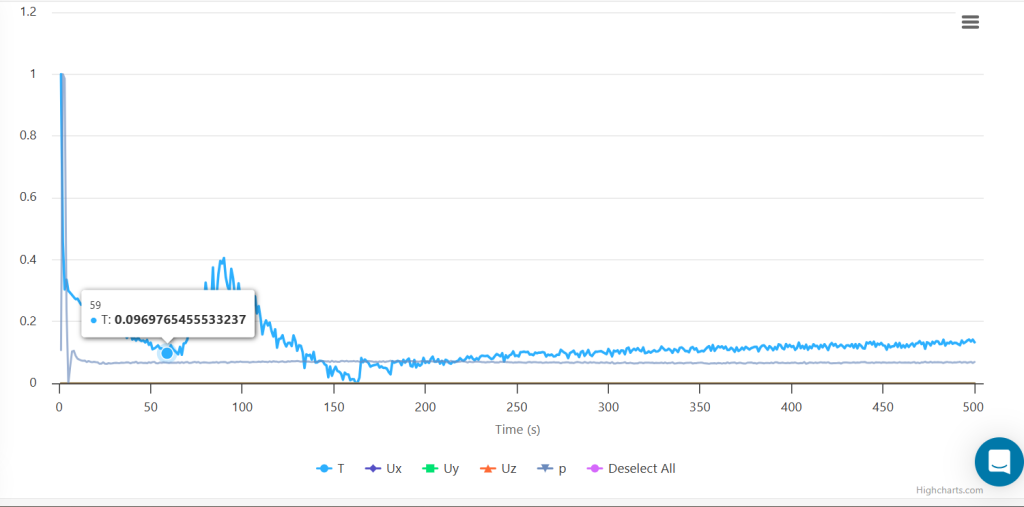
- The first two images show velocity (Ux, Uy, Uz), pressure (p), and temperature (T) over time.
- In the first graph, Ux (horizontal velocity) experiences fluctuations at around 100s, indicating possible turbulence or instability in airflow.
- The second graph shows temperature (T) over time, where the initial temperature is high but then stabilizes, implying the system is reaching a steady-state cooling condition.
3. Performance of Heat Sink
- The heat sink seems to work effectively in maintaining a controlled temperature range.
- However, localized heating at the outlet might indicate insufficient heat dissipation or low coolant flow rate in that region.
- If the goal is to improve cooling, modifications like increasing fin surface area, enhancing airflow, or improving thermal conductivity could be considered.
