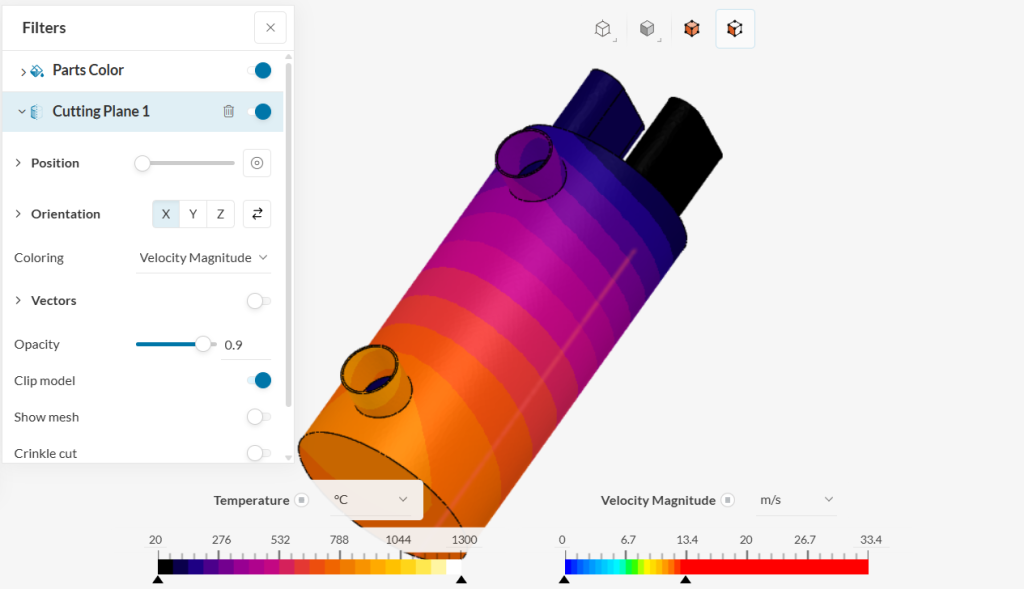
The pyrolysis machine works by heating organic feedstock in an oxygen-limited chamber, that could reach up to 1300°C. It features a controlled U-shaped flow to ensure efficient heat transfer and decomposition.
VERTICAL CROSS-SECTION
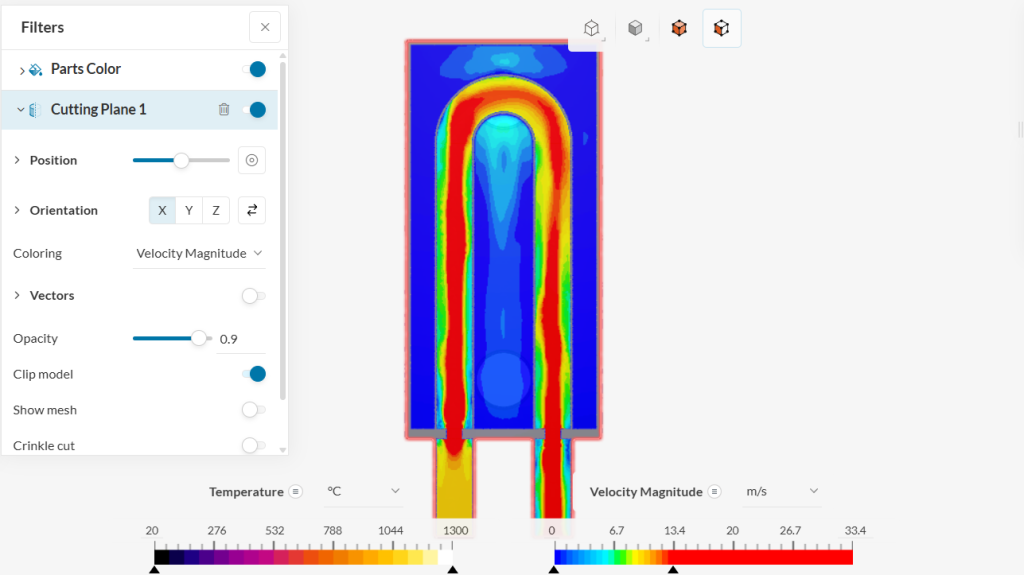
From the pyrolysis machine model, we can see that there is a distinct U-shaped flow pattern in the first simulation picture, with temperatures ranging from 20°C to 1300°C and fluid velocities reaching up to 33.4 m/s. The highest temperatures are concentrated in the lower curved section and along the vertical pathways of the U-shape, while the central chamber remains significantly cooler.
HORIZONTAL CROSS-SECTION
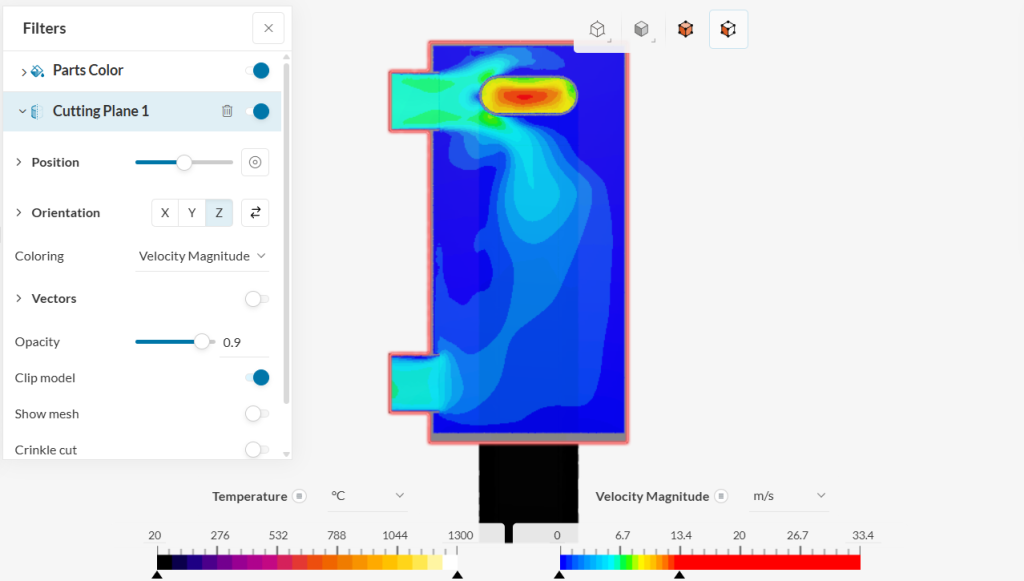
In the second simulation picture, is a horizontal cross-section perspective, the inlet and outlet ports positioned on the left side of the reactor. A high-temperature zone (approximately 1044°C) is concentrated in the upper portion of this view. The velocity distribution shows higher values near the inlet ports (around 13–20 m/s), with lower flow speeds in the main chamber.
INLET & OUTLET FLOW ANALYSIS
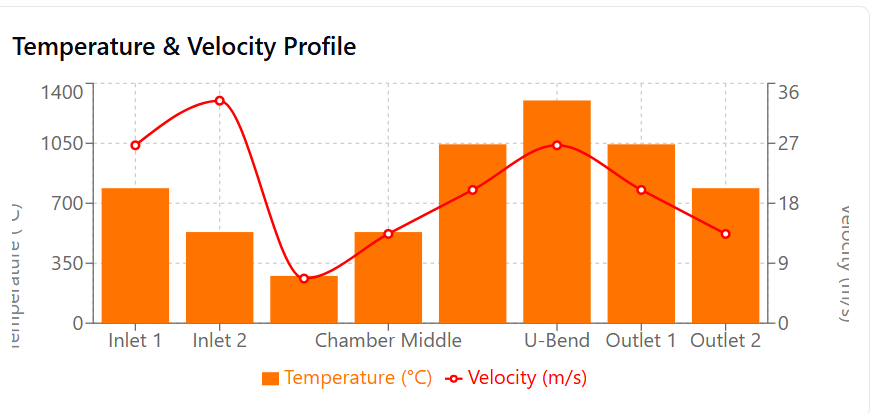
The temperature distribution follows a clear thermal gradient, starting at moderate levels at the inlets (532–788°C), peaking at the U-bend (1300°C), and then gradually decreasing toward the outlets.
The highest velocity is observed at Inlet 2 (33.4 m/s), gradually decreasing as the material moves through the chamber sections before stabilizing at the outlets (13.4–20.0 m/s).
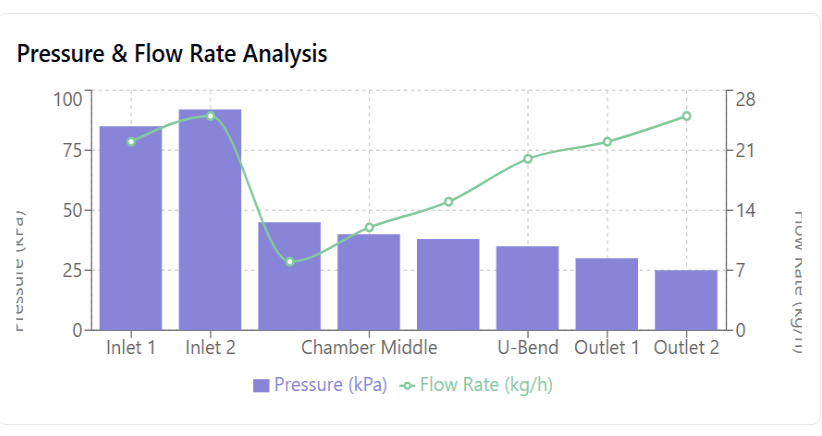
Pressure data indicates a steady drop from the inlets (85–92 kPa) to the outlets (25–30 kPa). Despite these changes, flow rates remain relatively stable between inlets and outlets (22–25 kg/h).
An interesting inverse relationship emerges between velocity and temperature in the middle chamber sections. As velocity decreases, temperature rises.
