
This thesis investigates the lid-driven cavity flow, a classical problem in fluid mechanics that serves as a benchmark for computational fluid dynamics (CFD) simulations. The lid-driven cavity flow consists of a fluid enclosed in a square or rectangular cavity, where motion is induced by a moving lid at the top. Despite its simple geometry, the flow exhibits complex behavior, including laminar, transitional, and turbulent regimes depending on the Reynolds number (Re).
The study aims to experimentally and numerically analyze the flow inside a square cavity (Aspect Ratio = 1) under laminar and turbulent conditions. The objectives include:
- Conducting experiments using PIV (Particle Image Velocimetry) and LDA (Laser Doppler Anemometry) to capture the flow field.
- Performing CFD simulations using ANSYS Fluent to validate numerical models.
- Investigating the effect of lid acceleration on transient flow development.
- Comparing different turbulence models, particularly the Reynolds-Averaged Navier-Stokes (RANS) equations with the k-ε turbulence model
EXPERIMENTAL STUDY
The experiment use PIV (Particle Image Velocimetry). PIV is an optical measurement technique used in fluid mechanics to visualize and measure velocity fields in a fluid flow
The principle of PIV are:
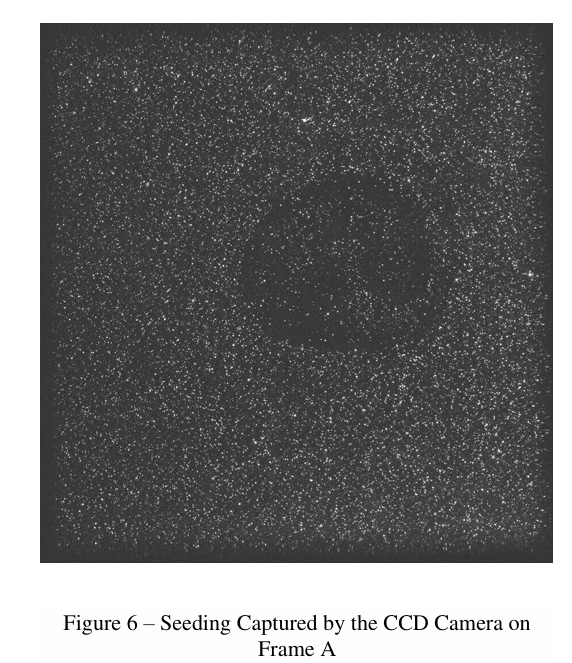
- The fluid is seeded with small tracer particles that follow the motion of the fluid.
- A pulsed laser is used to illuminate a thin sheet of the fluid
- A high-resolution CCD or CMOS camera captures two consecutive images of the particles at a very short time interval (Δt).
- The PIV software divides the image into small sections called interrogation windows.
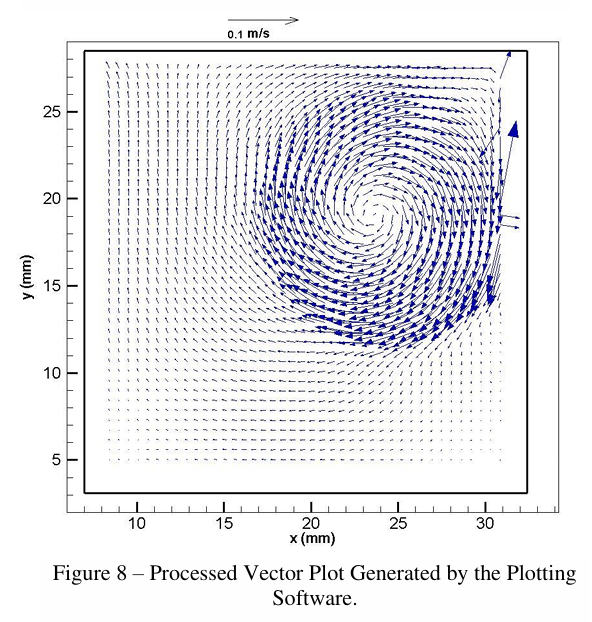
- A velocity vector map is generated showing the motion of the flow.


The output of the experiment are vector map that has been processed from raw data to better visualize the flow.
NUMERICAL STUDY USING CFD
The numerical study using CFD is used to validate the output from the experiment that has been conducted before.
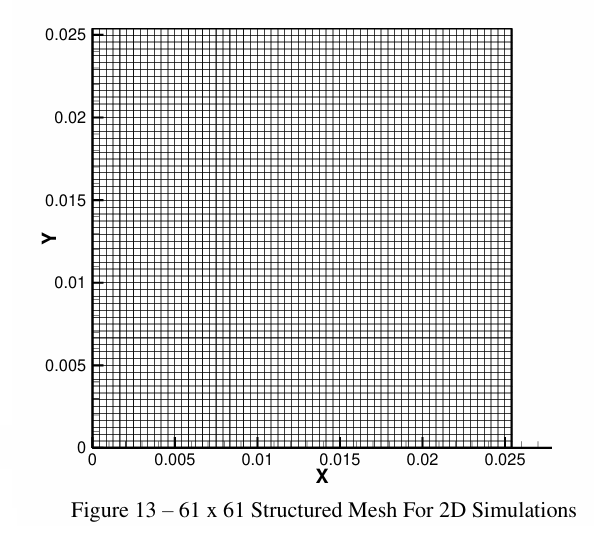
- Discretization of the Solution Domain
The solution domain is discretized for the Finite Volume Method which is based on the control volume formulation. The first step in the discretization is to divide the solution domain into several control volumes, also known as cells, where the variable of interest (ρ, v, T, p) is located at the center of the
control volume
- Solver Settings
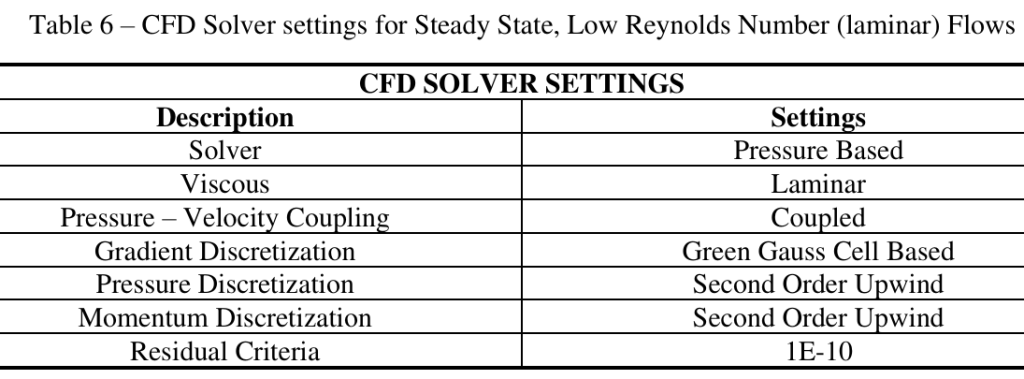
The pressure-based solver is selected which is ideal for incompressible flows. The viscous model is set to laminar. The solution algorithm is based on the coupled method in which the mass and momentum equation are solved in a coupled fashion.
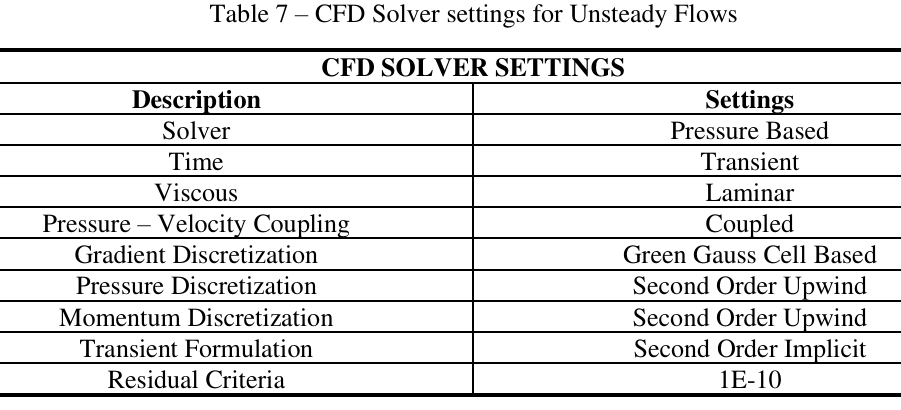
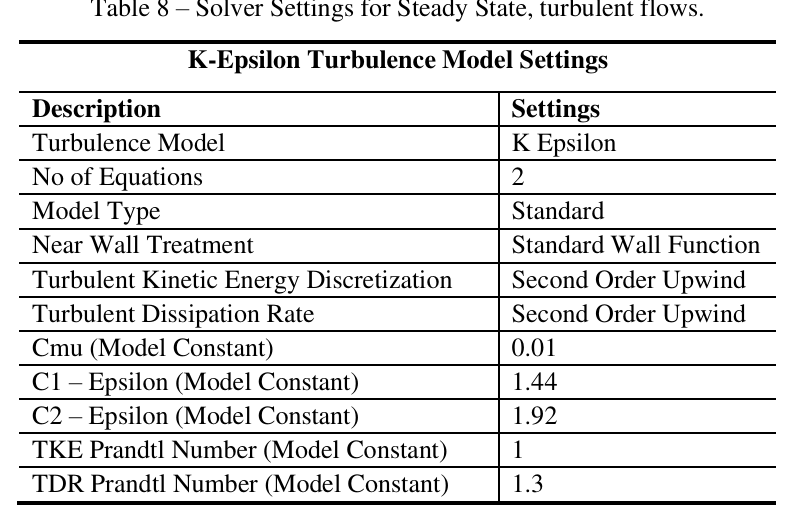
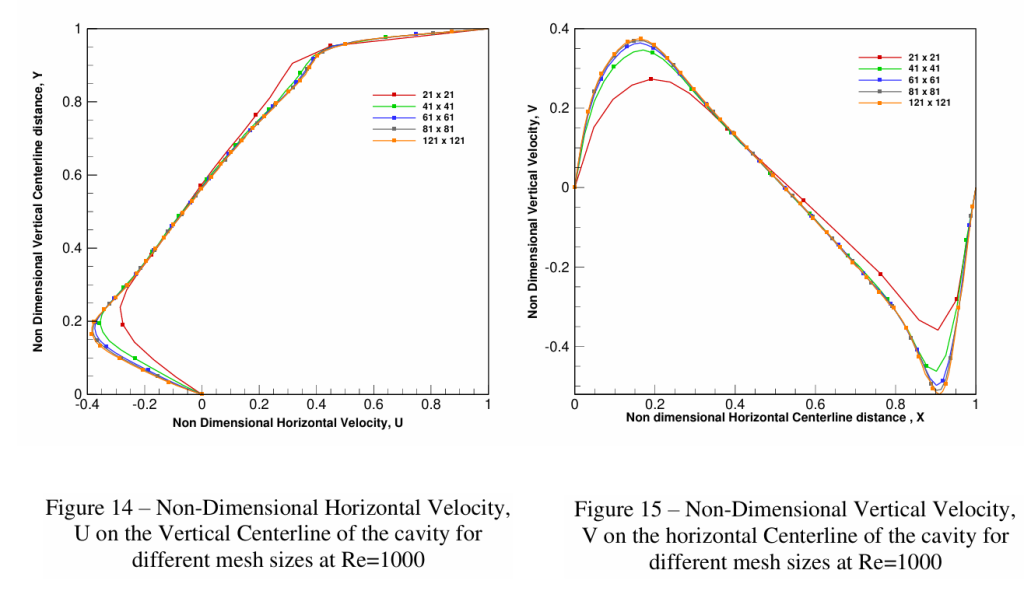
- Verification of the Numerical Method (mesh independence test)
The mesh independence study is used to analyze the effect the mesh size has on the converged solution. The study is carried out by keeping all the solver settings same for each run and only changing the mesh size
- Output
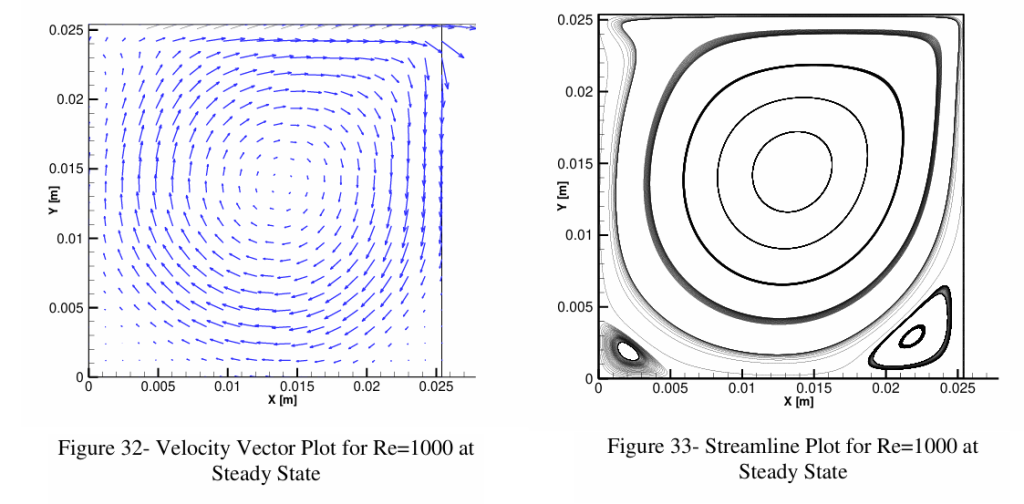
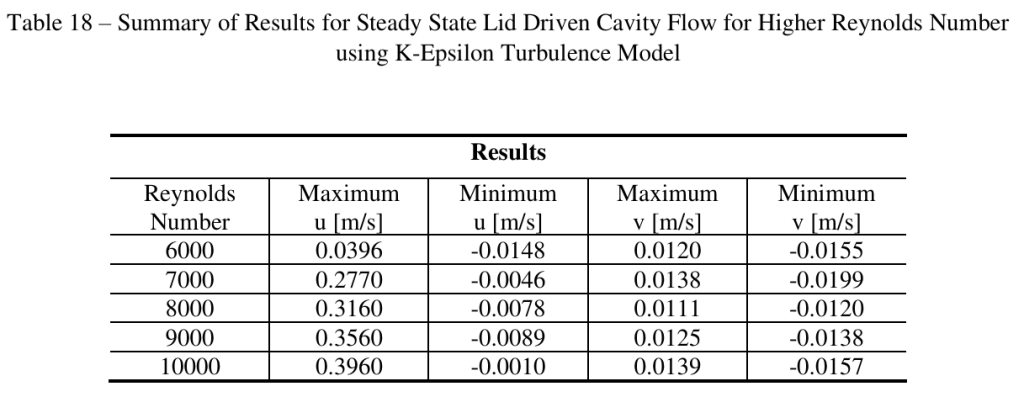
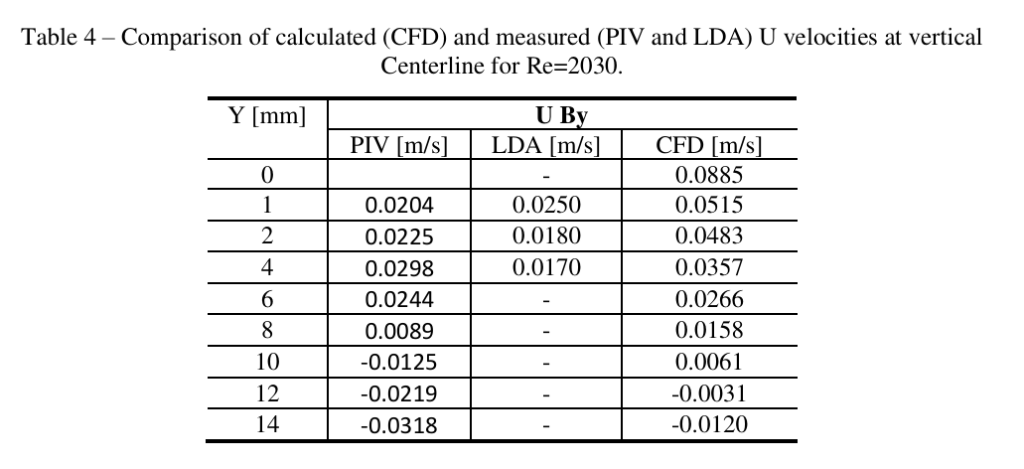
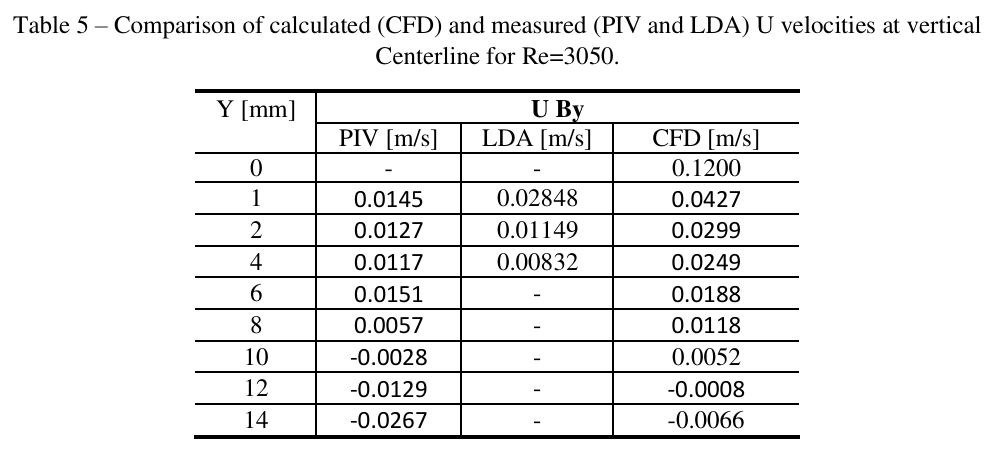
Comparison between CFD and Experimental measurement using PIV
Conclusion
- The PIV measured horizontal velocity distribution on the vertical center line of the cavity agreed well with LDA measured local velocities near the lid for low Reynolds Number in the laminar flow regime.
- The lid acceleration influenced the flow with sudden velocity peaks at points during the development from stagnation to steady state. The velocity profiles on the vertical and horizontal centerline also differed in shape between linear and sinusoidal lid accelerations with later producing much sharper gradients along the vertical and horizontal lengths of the cavity.
- The CFD predicted velocity distribution fared well with PIV measured velocity distribution and LDA measured local velocities near the lid but significantly overestimated close to the geometric center of the cavity for laminar flows.
