Muhammad Annawfal Rizky Sihotang
2106718281
Sustainable Energy Conversion System
To assess these effects, a Computational Fluid Dynamics (CFD) simulation was conducted using SimScale, examining the interaction between wind and a 20m × 25m × 15m building exposed to an initial 4 m/s wind speed along the x-axis.
Boundary Conditions
- Inlet (Front of the Domain): Wind enters the simulation domain from the front with a velocity of 4 m/s in the x-direction.
- Outlet (Back of the Domain): A pressure outlet is defined at the rear of the building, allowing unrestricted air exit.
- Walls (Sides): These are treated as no-slip walls, preventing air penetration and ensuring realistic boundary constraints.
This study highlights the importance of wind-aware building design in urban environments, ensuring optimal airflow management, improved energy efficiency, and enhanced occupant comfort.
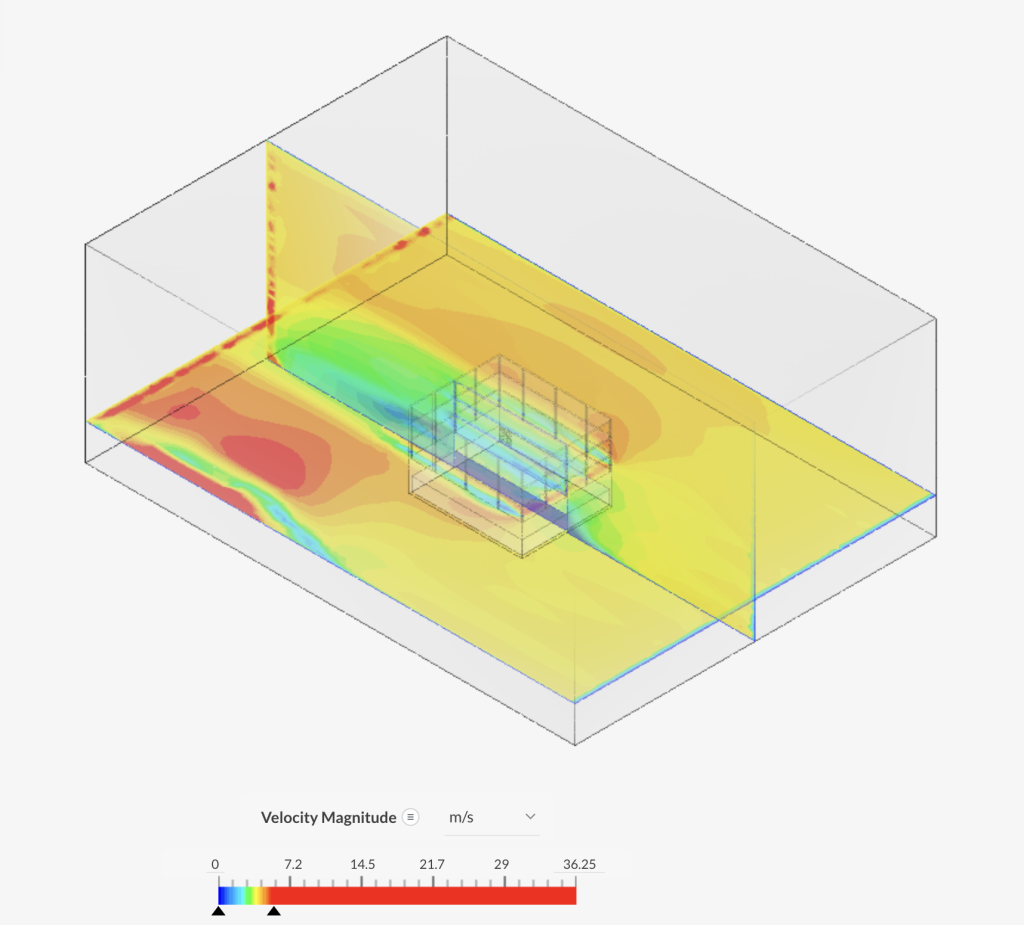
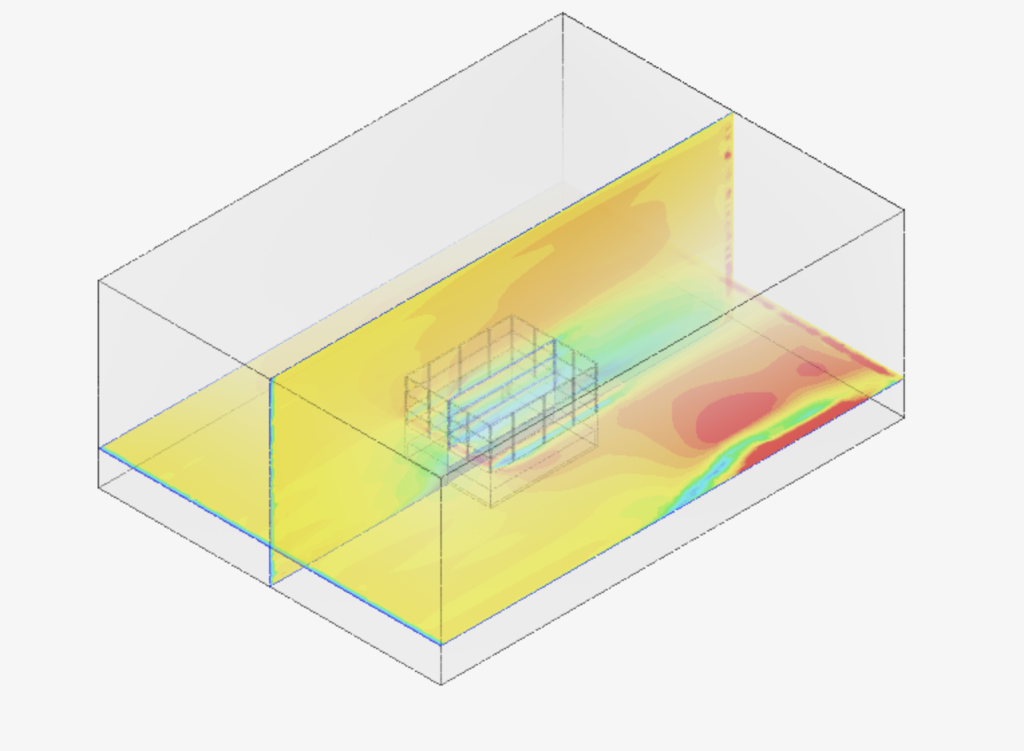
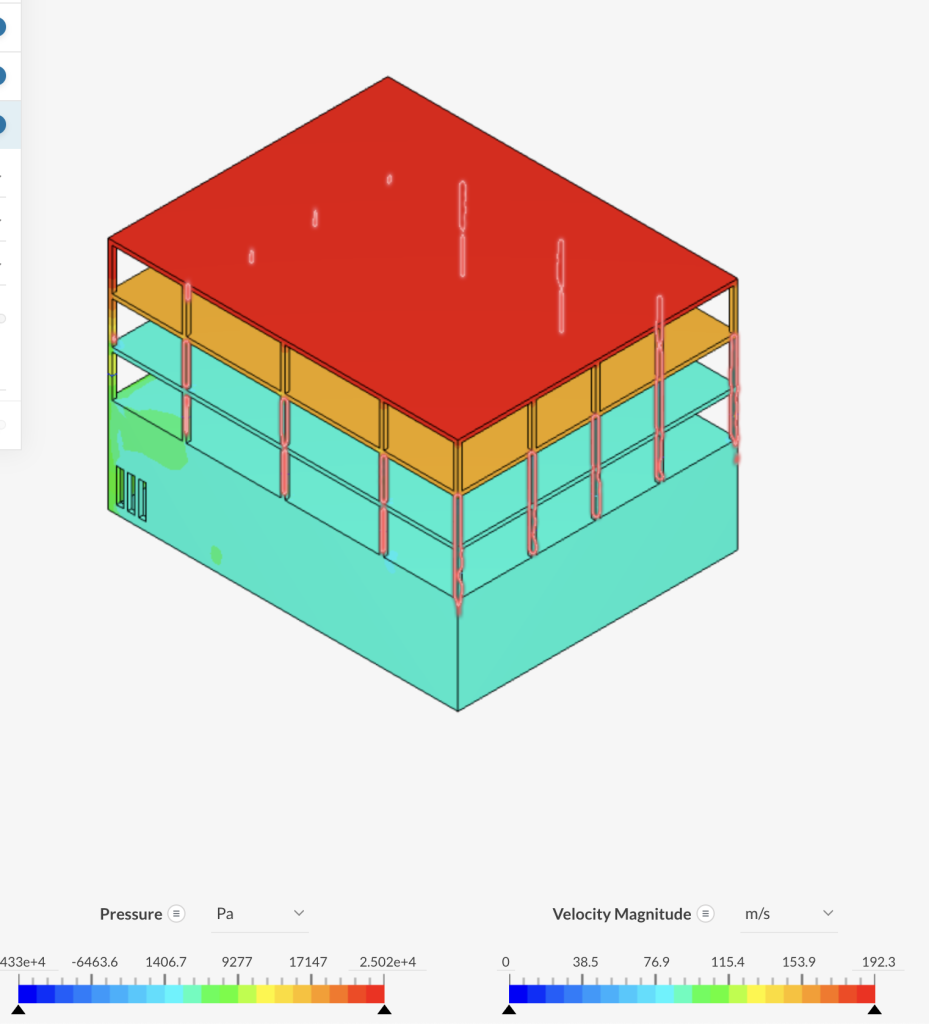
Flow Analysis and Structural Considerations
Windward Side (Front Face) – High-Pressure Zone
When the wind strikes the front facade, its velocity decreases significantly, resulting in a high-pressure stagnation area. The peak recorded pressure in this simulation is 27.81 Pa, concentrated mainly in the central part of the windward wall. This pressure buildup generates substantial wind loads, necessitating a robust facade design to endure these forces effectively.
Building Sides – Increased Wind Velocities
As the airflow moves around the building edges, it accelerates due to constriction effects. The highest measured wind speed is 7.79 m/s, occurring at the corners of the structure. Elevated wind speeds at pedestrian levels can lead to discomfort and, in extreme conditions, pose safety risks.
Rooftop – Flow Separation & Low-Pressure Zones
When air moves over the roof, it gains speed, resulting in regions of low pressure. These variations in pressure can produce lift forces, potentially affecting roof stability.
Leeward Side (Rear) – Wake Formation & Turbulence
As air separates from the structure’s rear, it creates a wake region characterized by turbulence. This phenomenon can negatively impact ventilation if openings are not strategically positioned, possibly leading to heat and pollutant accumulation.
Recommendations for Optimization
Mitigating High Wind Speeds: Planting trees in high-velocity areas can help moderate wind flow and enhance pedestrian comfort.
Enhancing Ventilation: Installing operable windows or vents at the windward (high-pressure) and leeward (low-pressure) sides can facilitate natural cross-ventilation.
Roof Stability Improvements: Incorporating parapets or aerodynamically designed roof features can help minimize vortex formation and improve structural stability.
