Fadhlan Kiska Anargya Dindra
2106658414
When designing buildings in urban areas like Depok, West Java, understanding the microclimate is essential. Wind patterns, pressure distribution, and airflow behavior can significantly impact thermal comfort, ventilation efficiency, and structural stability.
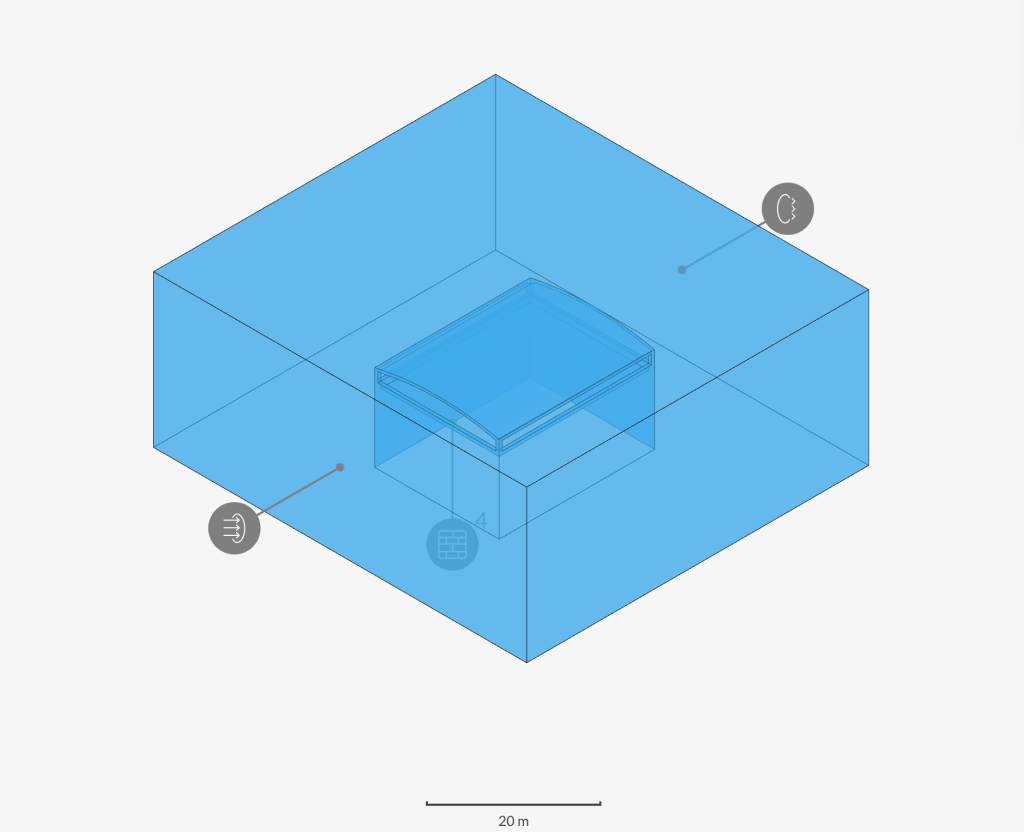
Using Computational Fluid Dynamics (CFD) simulation in SimScale, I analyzed how wind interacts with a 20m x 25m x 15m building when exposed to an initial 4 m/s wind speed along the x-axis.
Initial Conditions of the CFD Simulation
- Domain Setup
The simulation domain consists of a rectangular airflow volume around the 20m (width) × 25m (length) × 15m (height) building. The domain extends beyond the building to allow for proper airflow development. - Boundary Conditions:
- Inlet (Front Face of Domain): Wind enters the domain from the front with an initial velocity of 4 m/s in the x-direction.
- Outlet (Back Face of Domain): The pressure outlet is set at the rear of the building, allowing air to exit freely.
- Walls (Sides, Top, and Bottom of Domain): The side walls, top, and bottom are treated as no-slip walls, meaning no air passes through them.
Simulation Result
- Corner Top Front View
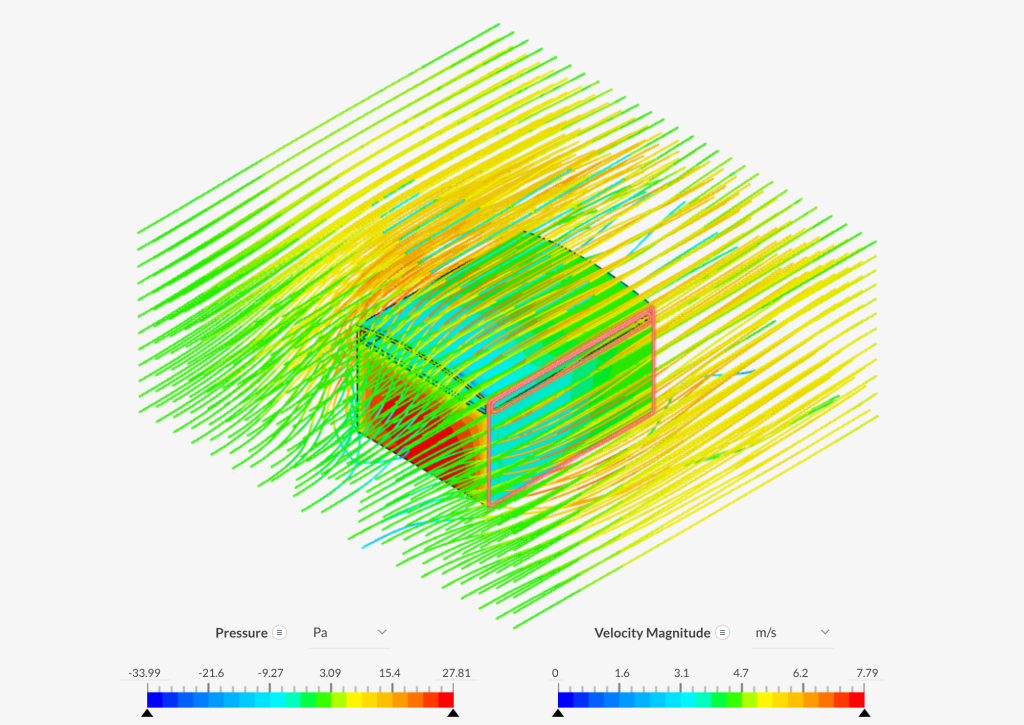
2. Side View
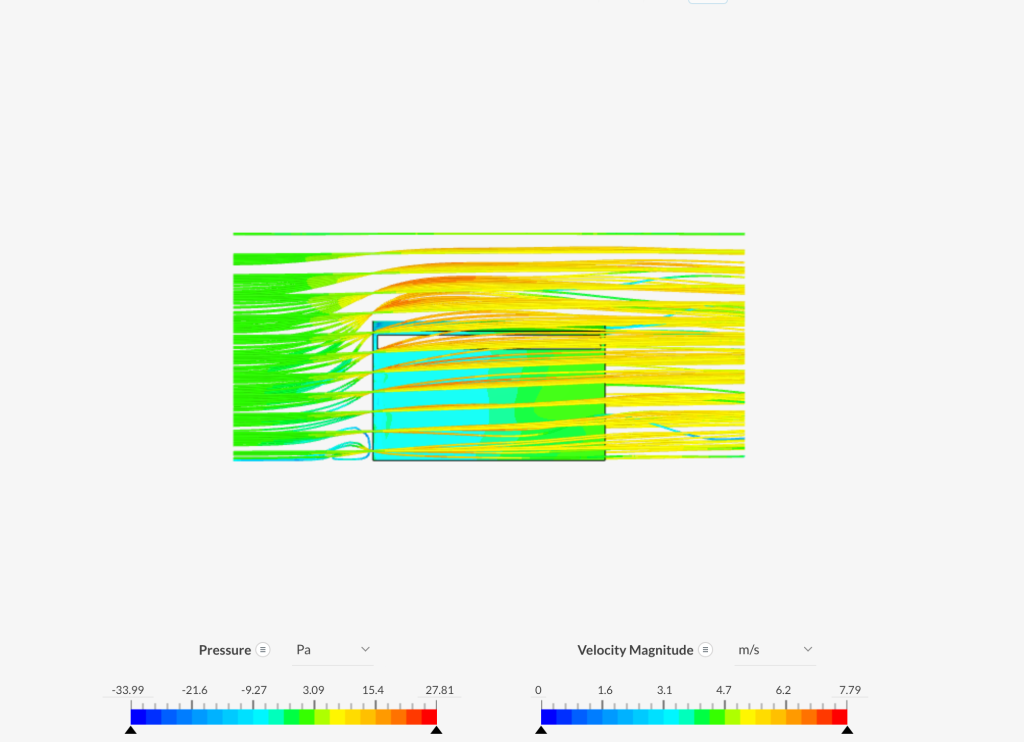
3. Front View
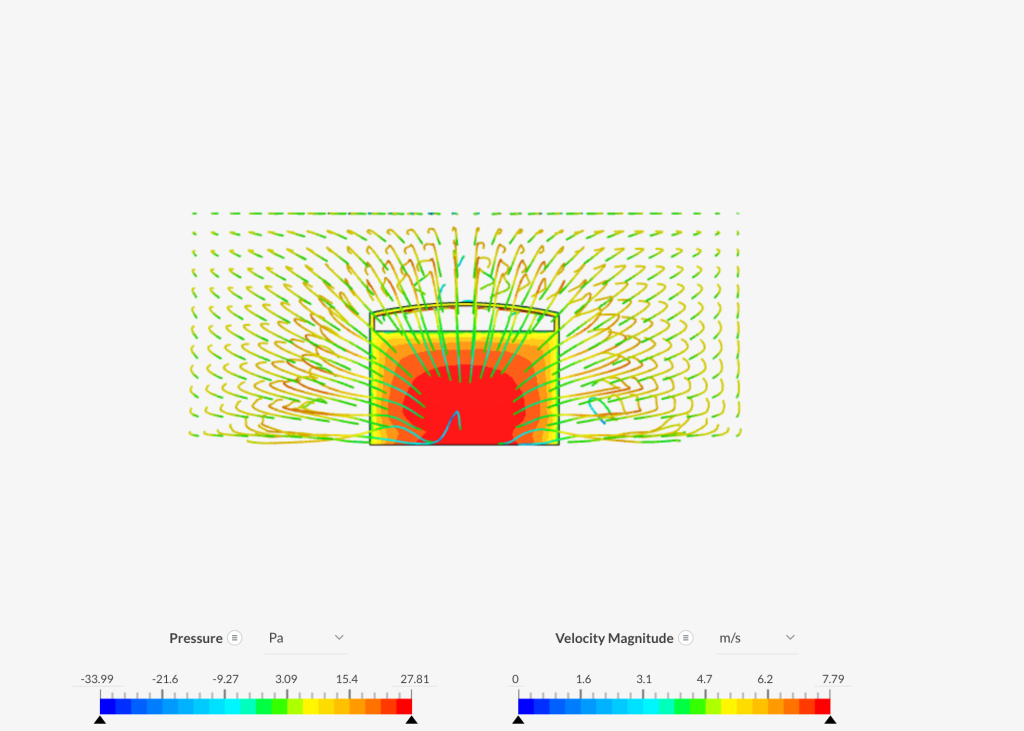
4. Back View
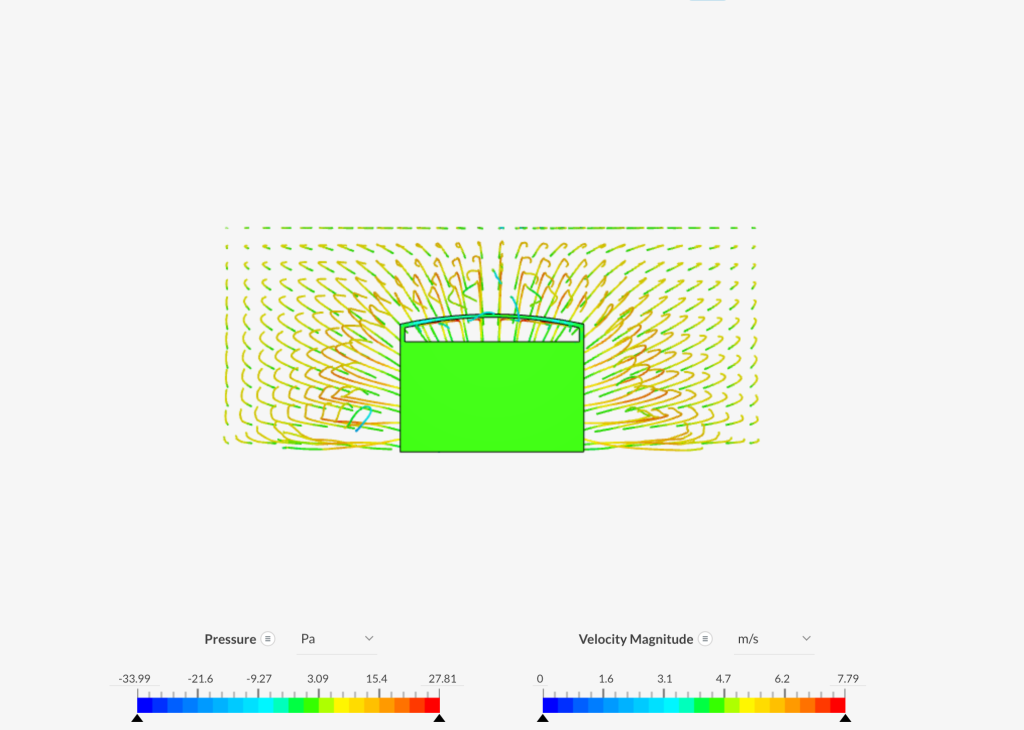
5. Corner Top Back View
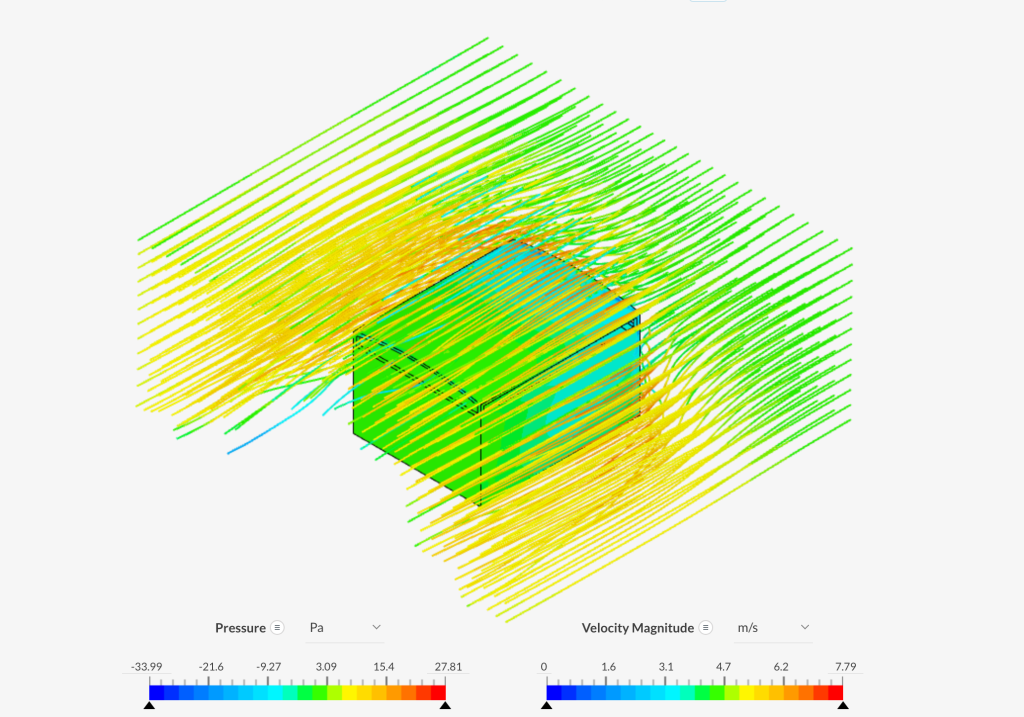
Analysis
Windward Side (Front Face) – High-Pressure Zone
- As the wind impacts the front facade, velocity significantly decreases, creating a high-pressure stagnation zone.
- The highest recorded pressure in this simulation is 27.81 Pa, concentrated in the central region of the windward wall.
- This high-pressure results in significant wind loads, requiring a structurally resilient facade to withstand the force.
Sides of the Building – Increased Wind Speeds
- Air is forced around the building edges, leading to an acceleration effect.
- The highest recorded velocity magnitude is 7.79 m/s, occurring at the building corners.
- High wind speeds at pedestrian levels may cause discomfort or even safety concerns in extreme conditions.
Rooftop – Flow Separation & Low-Pressure Zones
- As air flows over the roof, it experiences acceleration, leading to low-pressure zones.
- These pressure variations could generate lift forces on the structure, impacting roof stability.
Leeward Side (Rear) – Wake Formation & Recirculation
- A wake region forms due to airflow separation, creating turbulence behind the building.
- This could lead to poor ventilation if openings are improperly placed, potentially trapping heat and pollutants.
Recommendations for Optimization
- Installing trees near high-velocity zones can help reduce wind speeds and improve pedestrian comfort.
- Placing operable windows or vents at the front (high pressure) and rear (low pressure) can promote cross-ventilation.
- Parapets or aerodynamic roof adjustments can reduce vortex formation and enhance stability.
- Designing rear-facing openings and adding green spaces can break turbulence and improve the surrounding microclimate.
CFD simulations provide valuable insights into wind interaction with buildings. This study highlights the importance of wind-aware design, especially in urban environments like Depok. By implementing targeted design improvements, we can enhance comfort, increase energy efficiency, and ensure structural durability.
